

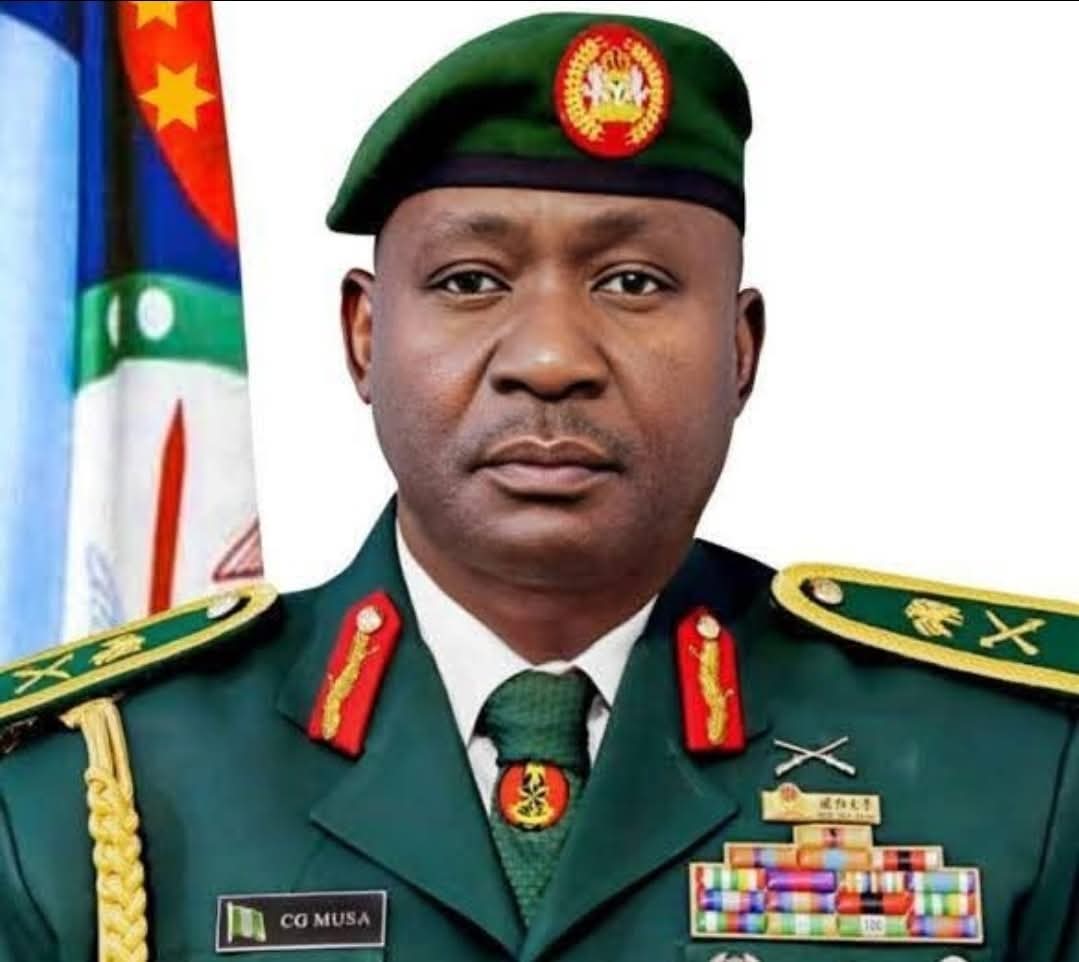
Newly nominated Defence Minister General Christopher Musa painted a stark portrait of the threat facing Nigeria during his confirmation hearing on December 3, 2025. He warned that terrorists view Nigeria not just as another battleground — but as a “rich and large” prize to exploit.
“The terr0r!st we are dealing with thinks Nigeria is so rich that when they come to Nigeria, they can make it,” Musa told senators and citizens alike. “So anything they are doing anywhere, their target is to come to Nigeria
The comment drew attention not just for its bluntness, but for its chilling implication: the scale and ambition of the threat confronting the country.
General Musa, formerly the Chief of Defence Staff (CDS), was officially confirmed as the new Defence Minister after a thorough, five-hour Senate screening session. The appointment comes in the wake of the resignation of former Defence Minister Badaru Abubakar on health grounds.
Upon assuming the role, Musa reiterated long-held concerns about Nigeria’s vulnerability to cross-border infiltration. He pointed to the country’s porous borders and its geographic location adjacent to unstable Sahel regions as primary reasons why extremists see Nigeria as an attractive target.
Musa has repeatedly argued that the country’s border with Niger — among others — is one of the most dangerous zones, given how easily fighters and weapons can slip through if proper controls are not enforced.
In recent months, Musa has outlined a multipronged approach to confront the growing terror challenge. That includes stronger border security — potentially involving fencing and deployment of surveillance technologies — and a crackdown on the financial networks that sustain extremist groups.
He said security agencies are actively working to trace and disrupt funding streams that support terror activities. Border closures alone, he warned, will not suffice if local actors continue to provide shelter, funding or logistics to militants.
Musa also underscored the importance of community collaboration and local intelligence. He insisted that military efforts must be complemented by citizens refusing to trade with or shelter terrorists. “If we don’t give them space, they won’t thrive,” he said.
During the Senate hearing that confirmed him, Musa faced tough questions about recent security failures — including the withdrawal of troops from a school in Kebbi State just before a mass abduction and the killing of a senior officer in Borno. He promised thorough investigations and action against any negligence or sabotage.
Yet, he acknowledged that the enemies Nigeria now confronts are no longer conventional. He described them as “evil forces who do not mean this country well,” pledging that the new Defence Ministry under his watch will prioritize defence of lives, protection of schools, and unity of purpose among all security agencies and communities.
Musa’s blunt message reflects a broader strategic shift in how Nigeria perceives the terrorism threat. No longer contained to the northeast or remote border zones, extremists are increasingly targeting Nigeria because of its population, resources, and visibility.
In saying that terrorists believe Nigeria is “rich and large,” Musa did not merely warn of financial motives — he highlighted a worldview that sees Nigeria as a prize to be taken, not just a battlefield to fight on.
This framing — coming from the country’s new Defence Minister — underscores the urgency for comprehensive reforms: reinforced borders, robust surveillance, dismantling of terror funding networks, and active civic participation.
As Nigeria grapples with a surge in kidnappings, banditry, and insurgent attacks, the warning by General Musa serves as a critical awakening: defeating the terror threat will require not just military might — but structural change, national coordination, and societal vigilance.