


In what has been described as Rivers State’s “most peaceful” local council election, the outcome appeared predetermined long before ballots were cast. The exercise, held across the 23 local government areas on Saturday, August 30, 2025, was conducted under a power-sharing arrangement locally termed “collabo.”
The system took shape during party primaries, where the two dominant political blocs—the People’s Democratic Party (PDP) and the All Progressives Congress (APC)—reportedly agreed to field a single candidate per LGA.
Sources said this was the product of negotiations led by Federal Capital Territory Minister Nyesom Wike, who is widely regarded as the political leader of the state.

- VIDEO: Woman Claiming to Be Chris Okafor’s Former Wife Makes Explosive Allegations
- I will not be vice-president to anybody ~ Peter Obi
- Israel recognises Somaliland as sovereign state
- 70-year-old Indian woman gives birth to her first child
- Ghanaian Prophet, Eboh Noah, Builds 8 Arks, Reveals God Has Warned Him That The World Will End On Christmas Day ~ Not By Fire, But By Another Global Flood.
- VIDEO: Pregnant wife bursts into tears as husband refuses to go beg neighbour Jollof rice
Under the arrangement, the APC secured 20 councils, while the PDP got three, including Wike’s Obio-Akpor stronghold. Each candidate, however, is believed to be loyal to Wike.

The deal was also tied to a peace pact with suspended Governor Siminalayi Fubara, who allegedly ceded political structures back to his predecessor in exchange for reconciliation and a path to reinstatement once the state of emergency ends on September 18.
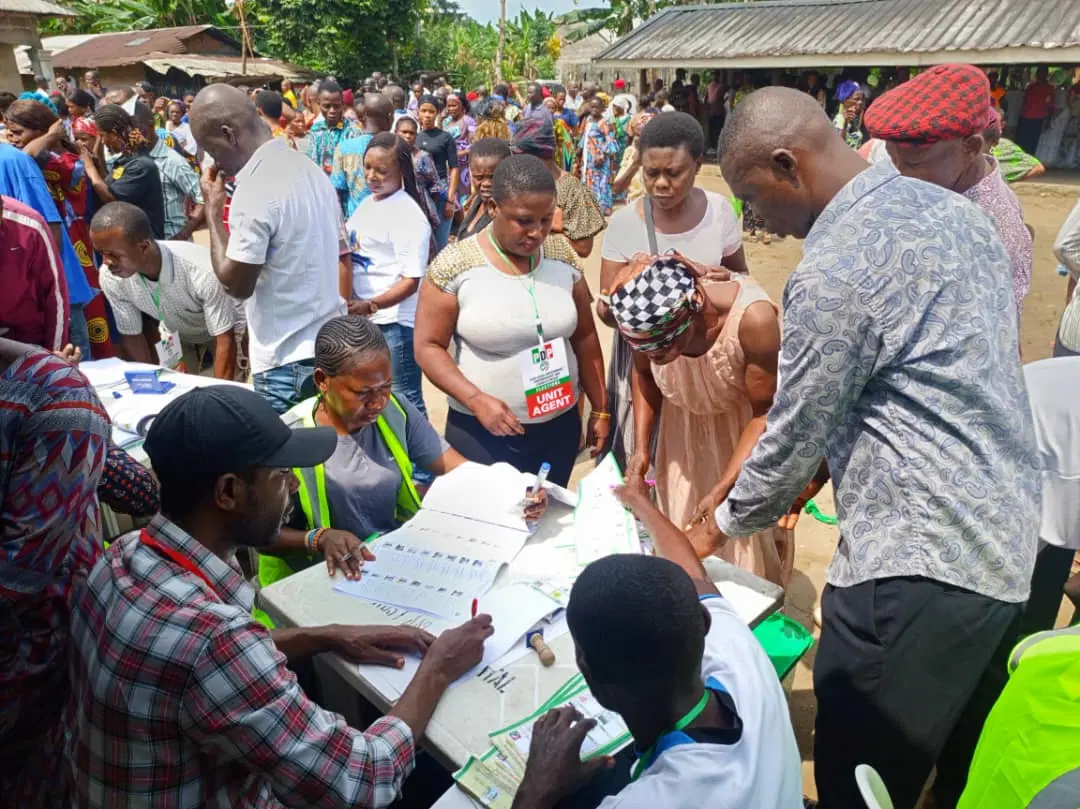
As a result, voter turnout was low, with many residents convinced that the winners had already been decided. Some polling units wrapped up by midday, as the exercise appeared more like an endorsement of earlier agreements than a competitive contest.
Wike, who voted in Obio-Akpor LGA, described the election as a crucial step towards restoring grassroots democracy. He praised the Rivers State Independent Electoral Commission for a smooth and peaceful process.

Observers like Emma Okas Wike, former president of the Nigerian Institute of Estate Surveyors and Valuers, called on those elected to prioritize the interests of the people.

Meanwhile, elderly voters like 81-year-old Allswell Ogbonda Johnson expressed gratitude for the opportunity to participate, despite the predictability of the outcome.