

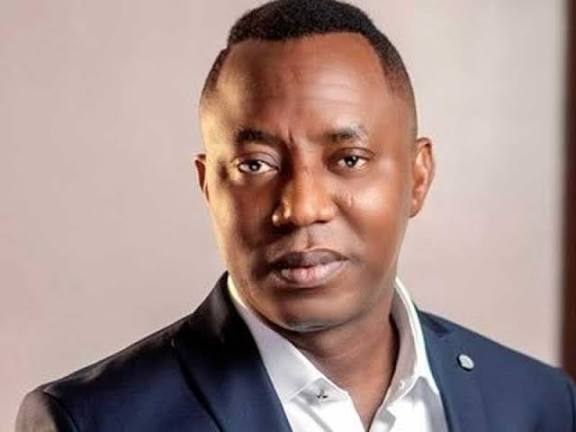
In a shocking statement that has sent ripples across Nigeria and beyond, human rights activist Omoyele Sowore has labeled the Nigerian government as the country’s “top terrorist organization.” The outspoken activist made the claim during a live interview on Tuesday, sparking debates and outrage on social media, news platforms, and political circles.
Sowore, the founder of Sahara Reporters and a long-time critic of the Nigerian government, argued that the state’s policies, security strategies, and treatment of its citizens have created an environment of fear and oppression. According to him, acts of violence, neglect, and systemic injustice carried out or condoned by government agencies constitute terrorism against ordinary Nigerians.
“The government is not just failing its citizens,” Sowore declared. “It is actively terrorizing them. The actions of the state in handling security crises, suppressing dissent, and neglecting the welfare of Nigerians amount to organized terror.”
His remarks come amid rising concerns over insecurity, attacks by armed groups, and violent clashes across several parts of Nigeria. Citizens have faced kidnappings, banditry, and targeted killings, while the government’s responses are often criticized as slow or ineffective. Many Nigerians have taken to social media platforms like Twitter and X to voice frustration, echoing Sowore’s sentiment that the state is failing in its primary duty: protecting its people.
Omoyele Sowore also spoke about Nnamdi Kanu, the leader of the Indigenous People of Biafra (IPOB), describing him as a symbol of resistance against government oppression. According to Sowore, Kanu represents the frustration of many Nigerians who feel marginalized and neglected by the state. He praised Kanu for speaking out on behalf of his people and challenging the government’s heavy-handed approaches to dissent and security matters.
Sowore emphasized that Kanu’s activism highlights the government’s failure to address legitimate grievances. He argued that the treatment of Kanu and IPOB members—through arrests, prolonged detentions, and alleged human rights abuses—demonstrates a pattern of state intimidation that undermines democracy and fuels unrest. Sowore suggested that such actions only strengthen the resolve of separatist movements and deepen divisions within the country.
Furthermore, Sowore called for dialogue and fair treatment, insisting that the Nigerian government must engage with leaders like Kanu rather than resorting to force. He warned that continued repression could escalate tensions further, threatening national stability. Sowore’s comments position Kanu not just as a controversial figure, but as a representation of broader systemic issues in Nigeria’s governance and security policies.
The activist also criticized the government for suppressing freedom of speech, citing arrests and harassment of journalists, activists, and opposition figures. He claimed that the state’s “pattern of targeting dissenters” is part of a broader strategy to intimidate citizens into silence.
Unsurprisingly, Sowore’s declaration has drawn swift reactions. Government officials have largely ignored the claim publicly, but social media platforms are flooded with heated debates. Supporters praise Sowore for speaking the truth, calling his remarks “bold” and “necessary,” while critics accuse him of exaggeration and spreading fear.
For many Nigerians, Sowore’s declaration resonates with lived experiences of insecurity, corruption, and governmental inefficiency. While the government insists that security forces are actively working to curb violence, critics argue that systemic failures persist, leaving citizens vulnerable and frustrated.
Whether seen as hyperbole or a wake-up call, Sowore’s comments have reignited discussions about governance, accountability, and the social contract in Nigeria. One thing is clear: ordinary Nigerians are paying the price, and the conversation about government responsibility and citizen safety is more urgent than ever.