

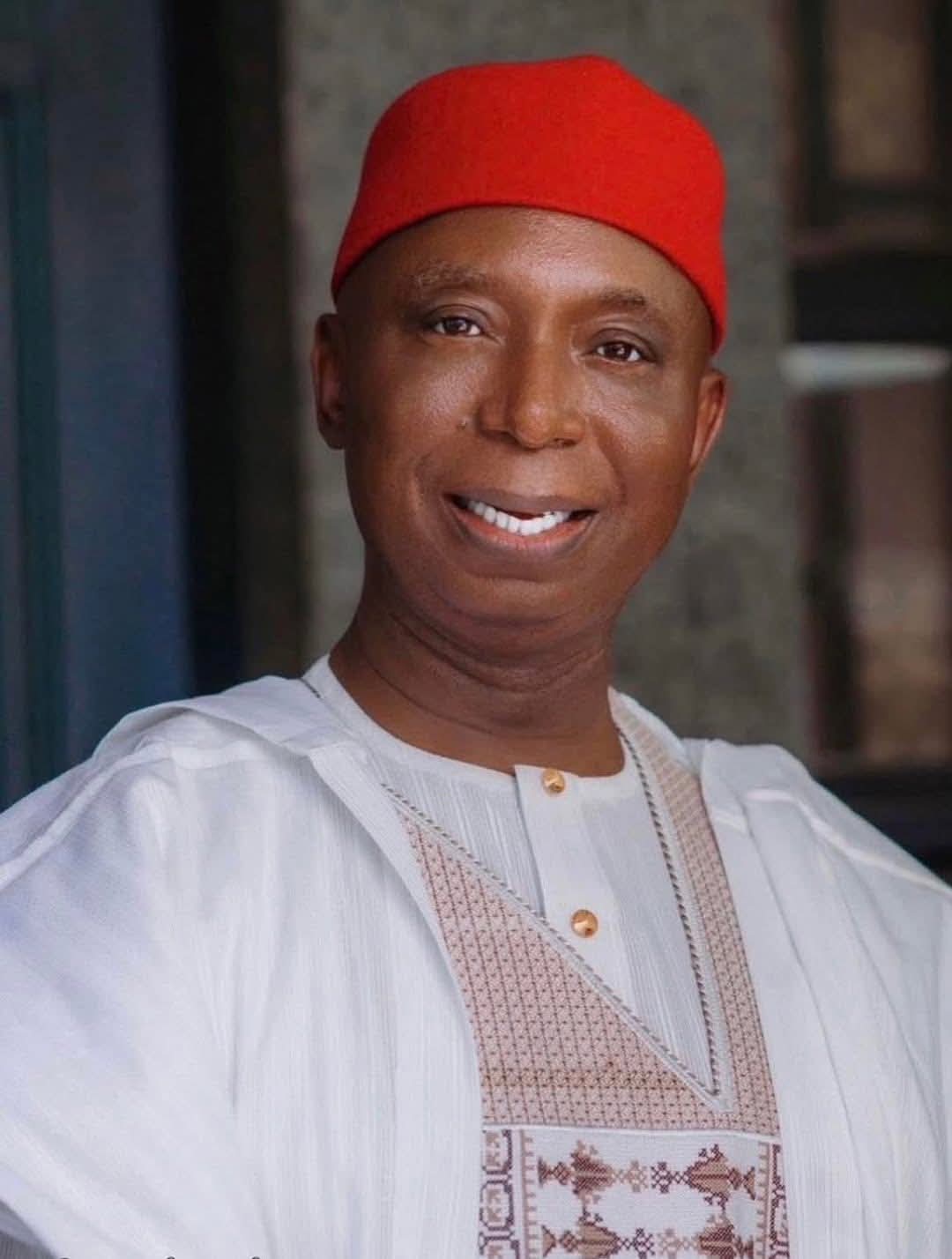
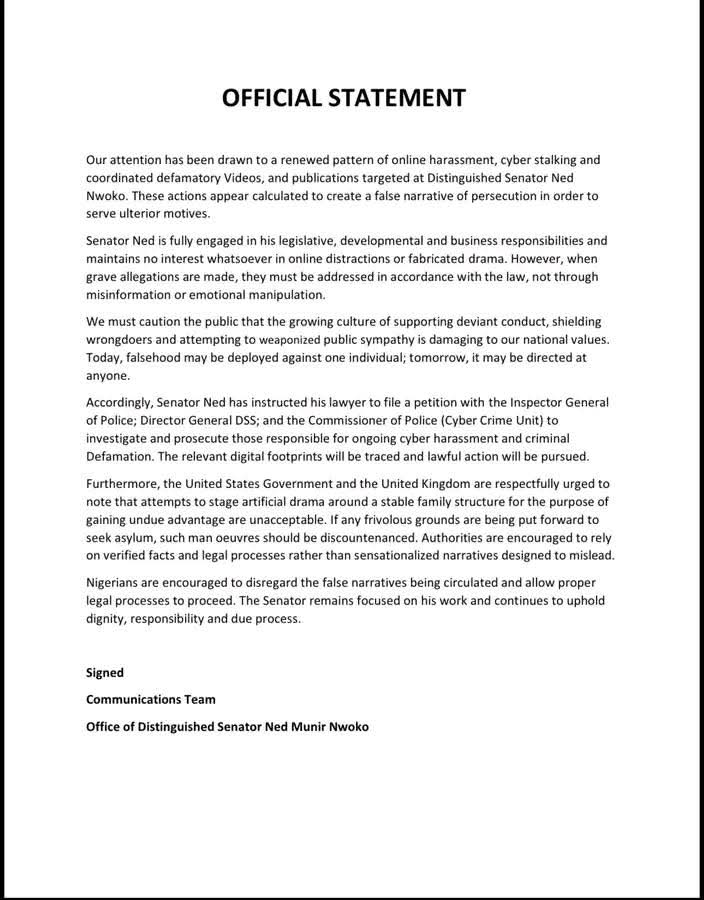
Billionaire businessman and lawmaker, Prince Ned Nwoko, has issued an official statement addressing what he describes as sustained cyber harassment, coordinated smear campaigns, and the circulation of defamatory content targeted at him and his family. Nwoko, who represents Delta North in the Senate, confirmed that he has formally petitioned several security and law enforcement agencies, urging them to investigate and take appropriate legal action against those responsible.
In the statement released on Tuesday, Nwoko expressed concern over the increasing rate at which false allegations, manipulated images, and fabricated reports about him have spread across social media platforms. He noted that the perpetrators appear to be part of an organised network using digital platforms as tools to defame, blackmail, and incite public hostility for personal or political gain.
According to Nwoko, the decision to petition security agencies became necessary after attempts to ignore the attacks proved counterproductive. He stated that the harassment had gone beyond online trolling and had begun to affect his family, staff, and political engagements.
“For several months, I have endured relentless cyberbullying, character assassination, and the deliberate circulation of malicious content designed to damage my reputation,” the statement read. “These activities have become increasingly coordinated, with some individuals openly boasting about their involvement. I have therefore submitted petitions to the appropriate security agencies so that the law can take its course.”
In recent years, Nwoko has been a consistent target of online narratives ranging from political criticism to sensationalised personal stories, many of which he has previously dismissed as false. Analysts suggest that his high public profile, marriage to actress Regina Daniels, and involvement in politically sensitive projects—such as debt recovery efforts for states and the push for the establishment of the Anioma State—have made him a frequent subject of both legitimate scrutiny and malicious fabrication.
Digital rights advocates say the escalating harassment reflects a broader trend of rising cyberbullying and misinformation in Nigeria’s online space. With over 100 million active internet users, social media has become a fertile ground for both civic discourse and coordinated attacks on public figures. Under Nigeria’s Cybercrimes (Prohibition, Prevention, Etc.) Act 2015, the dissemination of false information intended to cause harm, extort, intimidate, or defame an individual is a criminal offence.
Nwoko appealed to Nigerians to verify information before amplifying it online, warning that misinformation poses a threat not only to individuals but to national cohesion. He reiterated his commitment to transparency and said he would continue to focus on legislative responsibilities rather than engage in online battles.
“I believe in the rule of law, and I am confident that the authorities will investigate thoroughly and prosecute those found culpable,” he said. “No one is above scrutiny, but no citizen should be subjected to malicious attacks meant solely to destroy their character.”
As security agencies begin their investigations, digital rights groups and policy analysts will be watching closely to see whether the outcome could shape future approaches to cyber defamation, online accountability, and digital safety in Nigeria.