

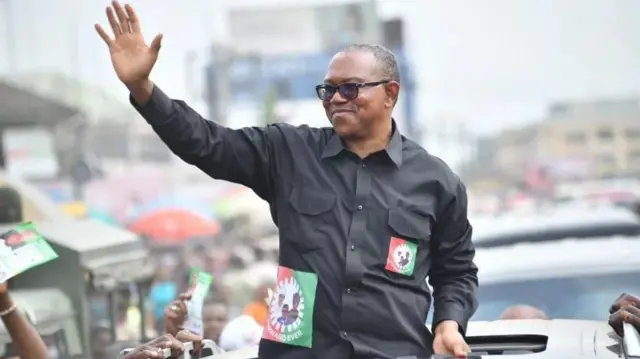
Former Borno State Governor Alimodu Sheriff has sparked controversy with comments about the outcome of the 2023 presidential election in Lagos State.
Speaking during an interview on Channels Television, Sheriff claimed that Peter Obi won in Lagos not because of widespread popularity but due to what he described as the overwhelming population of Igbos in the state.
“The reason Peter Obi won Lagos is simple; there are more Igbos in Lagos than any other tribe,” Sheriff stated. “I have lived in Lagos since 1980, and I know the demography. Lagos is occupied by the Igbos.”
His comments came while he was downplaying the chances of the African Democratic Congress (ADC) ever winning a presidential election in Nigeria, arguing that parties without strong state structures cannot rise to power.
- VIDEO: Woman Claiming to Be Chris Okafor’s Former Wife Makes Explosive Allegations
- I will not be vice-president to anybody ~ Peter Obi
- Israel recognises Somaliland as sovereign state
- 70-year-old Indian woman gives birth to her first child
- Ghanaian Prophet, Eboh Noah, Builds 8 Arks, Reveals God Has Warned Him That The World Will End On Christmas Day ~ Not By Fire, But By Another Global Flood.
- VIDEO: Pregnant wife bursts into tears as husband refuses to go beg neighbour Jollof rice
When the anchor challenged his claim (citing Obi’s Labour Party, which had no governor but still secured major wins), Sheriff dismissed the victory as tribal.
“Obi ran on the platform of his party and his tribe. The Igbos voted for him; they will always vote for him,” he said.
Asked whether non-Igbo groups, especially Yorubas, also supported Obi during the election, Sheriff replied, “If they did, they were very few.”
His remarks have drawn sharp reactions on social media, with critics accusing him of reducing a complex election outcome to ethnicity, while others argue that voting patterns in Lagos reflected dissatisfaction with the status quo, not just ethnic loyalty.
As the political dust from the 2023 elections continues to settle, Sheriff’s statements have reignited discussions around identity, voting behavior, and how deeply ethnic narratives influence Nigerian politics.
SEE VIDEO BELOW: