


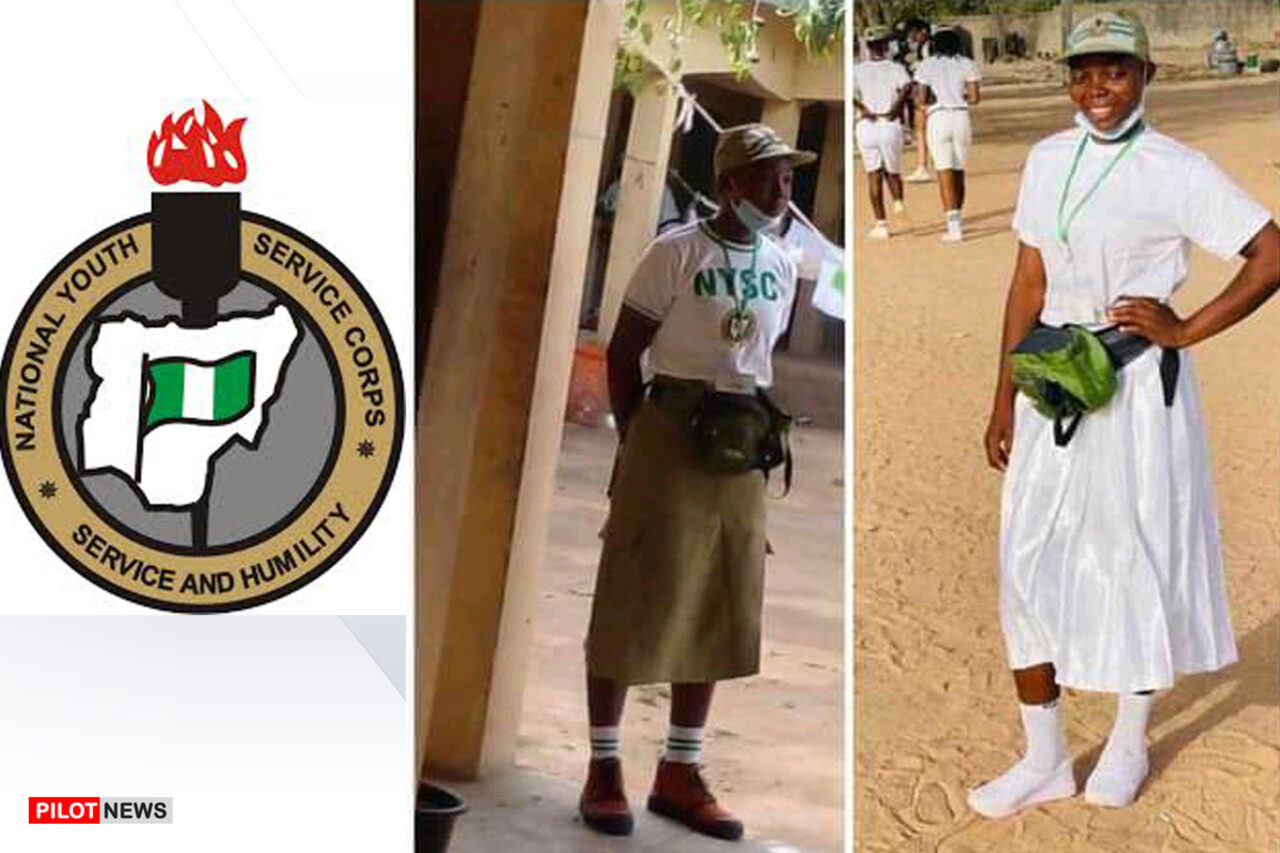
The Federal High Court in Abuja has ordered the National Youth Service Corps (NYSC) to allow female corps members wear skirts if it aligns with their religious beliefs.
Justice Hauwa Yilwa gave the ruling on June 13, 2025, in a case filed by two former corps members (Miss Ogunjobi Blessing and Miss Ayuba Vivian) who challenged the NYSC’s refusal to permit skirts as part of their uniform.
The women argued that being forced to wear trousers during service violated their Christian faith, citing Deuteronomy 22:5, which they believe forbids women from dressing like men.
They also claimed the policy infringed on their fundamental rights to freedom of religion and human dignity as enshrined in the Nigerian Constitution.
- VIDEO: Woman Claiming to Be Chris Okafor’s Former Wife Makes Explosive Allegations
- I will not be vice-president to anybody ~ Peter Obi
- Israel recognises Somaliland as sovereign state
- 70-year-old Indian woman gives birth to her first child
- Ghanaian Prophet, Eboh Noah, Builds 8 Arks, Reveals God Has Warned Him That The World Will End On Christmas Day ~ Not By Fire, But By Another Global Flood.
- VIDEO: Pregnant wife bursts into tears as husband refuses to go beg neighbour Jollof rice
The court agreed, declaring that NYSC’s insistence on trousers for all female corps members was discriminatory and unconstitutional.
Justice Yilwa ruled that the women were wrongfully denied the right to practice their religion and granted all their requests. She ordered the NYSC to allow skirts as part of the official uniform for female corps members with genuine religious concerns.
She also directed the agency to recall the applicants, who had been forced out of the program, and issue them their NYSC certificates.
The judge described the treatment the women received from NYSC officials as harassment and an assault on their dignity. While the applicants had demanded ₦10 million each in damages, the court awarded them ₦500,000 each.
“This is a clear violation of their rights,” Justice Yilwa said. “No institution should deny any Nigerian their freedom of religion in the name of uniformity.”
The judgment sets a new precedent that could change how NYSC handles uniform policies in relation to religious expression.