

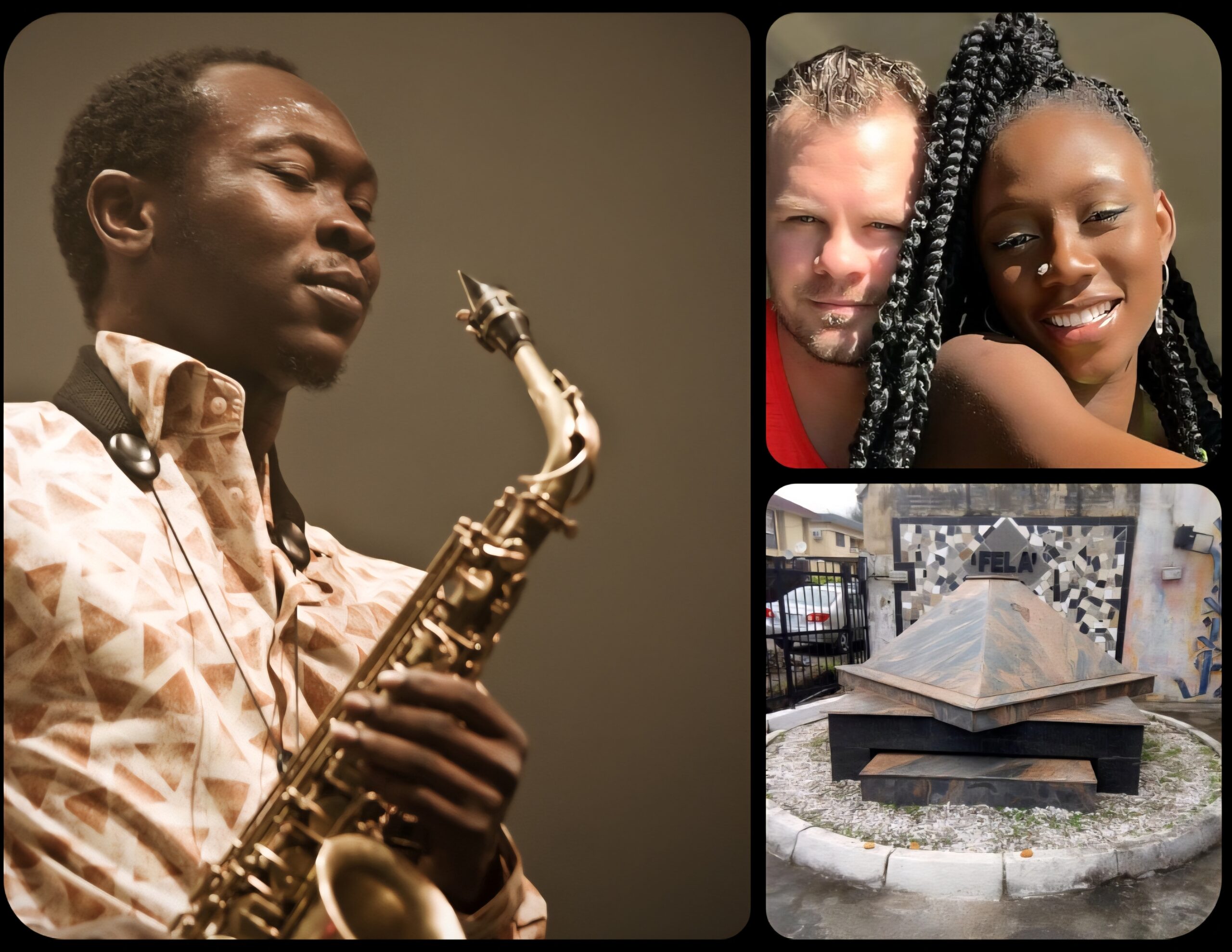
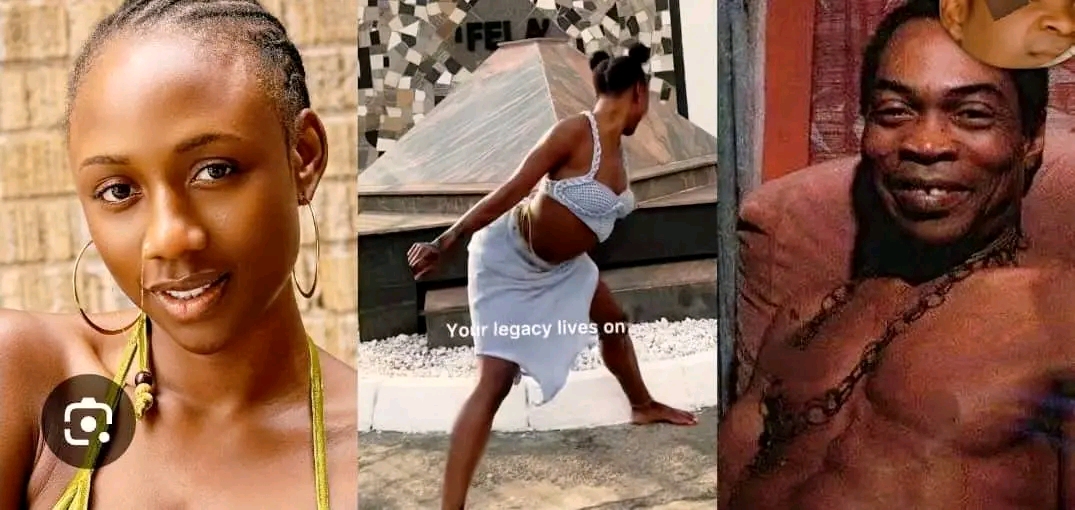
When news broke that Korra Obidi had visited the grave of Fela Anikulapo-Kuti and “twerked” in his honour, the internet erupted. The footage — shared by Obidi herself — shows her dancing at the graveside, calling it an “offering” to Fela and saying it was a tribute fitting for someone who loved a woman with “gyrating hips.” But the biggest twist in the story was that Seun Kuti — Fela’s youngest son — was present during the tribute and publicly reacted to it. Instead of voicing outrage, he offered support. He praised the gesture, implying that it tapped into the bold, unapologetic spirit his father was known for. In a short but loaded comment, Seun said: “You guys know what baba likes but you will never give him what he wants. E go better for you my sister.”
By calling Korra “my sister,” he framed the act not as scandalous or shameful — but as a kind of permission, a symbolic handing over to the cultural and musical heritage of Fela’s legacy. Korra backed it up with her own justification: she said the tribute was personal, a homage to Fela’s love for expressive dance, and a way to honour him the way she felt he’d have liked. She explained on social media that the dance was intentional, rooted in what she believed “Baba” appreciated when he was alive. But as expected, the move sparked a firestorm online. For many, twerking at a gravesite — no matter the intention — felt like crossing a line. They argued that cemeteries and graves deserve a level of reverence and sobriety, regardless of how flamboyant the person being honoured was. Some critics used harsh words: “wild behaviour,” “disrespect for legends,” “no respect for the departed.” Comments stressed that cultural norms and respect for ancestors or the dead should supersede artistic expression — even when celebrating someone as unorthodox as Fela. On the flip side, supporters argued that Fela lived and died for breaking norms — using his music, his lifestyle, his body and identity to challenge conservative conventions. Some even suggested he “would have loved” a tribute like this — bold, raw, and unapologetic.
By backing Korra’s tribute, Seun appears to place himself firmly in the camp that interprets Fela’s legacy not as something to be locked in solemn monuments — but celebrated with energy, flair and audacity. His reaction reframes the narrative: this isn’t about tastelessness or disrespect, but about honouring the spirit, the unpredictability and the defiance of his father.The entire saga touches on deeper questions: How do you honour legends who themselves rewrote what “honour” meant? Do you cast them in somber silence, or celebrate them with the same verve they lived with? Seun’s endorsement suggests that, for him, the answer is the latter.Whatever side you land on — controversy or celebration — one thing’s clear: this episode is a testament to the enduring, polarizing power of Fela’s legacy — and to Seun Kuti’s commitment to preserving it, on his own terms.