

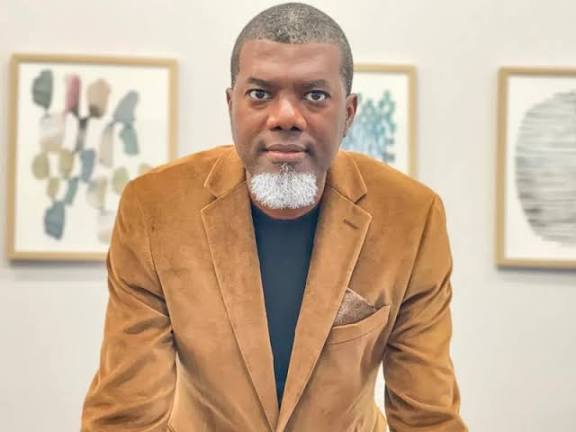
A throwback video of political commentator and former presidential aide Reno Omokri has resurfaced, in which he says his opinion of Bola Ahmed Tinubu changed drastically after the Supreme Court of Nigeria reportedly cleared certain accusations against the president.
Once a vocal critic of Tinubu, Omokri’s earlier objections centered around two major issues: alleged discrepancies in Tinubu’s academic credentials and accusations of involvement in drug-related offences.
However, following a personal investigation in September 2022 into Tinubu’s academic history, Omokri said he discovered credible evidence indicating that the president attended, passed, and graduated from Chicago State University — a claim he had previously challenged.
He stated then that he withdrew his prior criticisms about Tinubu’s education and urged others to stop spreading what he now considered misinformation.
Beyond the academic question, Omokri had also criticised Tinubu over a separate alleged drug-related conviction. But he says the Supreme Court’s ruling — clearing the president of that conviction or showing he was only tangentially involved as an accountant to someone else — forced him to rethink his stance.
“Since the Court exonerated him, I cannot continue to criticise him on that issue … because I would be like the people I condemned.”
In the resurfaced video, he reiterated this point: that his view of Tinubu changed the very day the Supreme Court cleared the accusations.
In recent months, Omokri has openly sympathised with Tinubu’s administration and policies. In June 2025, shortly after a meeting with the president in Lagos, he publicly declared his “full, unequivocal, and unwavering support” for Tinubu’s “Renewed Hope” agenda — even praying that Tinubu’s presidency extends until 2031.
He has since praised the administration’s efforts to stabilise the economy, arguing that Tinubu is taking necessary but tough decisions to correct economic mismanagement from previous administrations.
Omokri’s reversal — from outspoken critic to public supporter — has reignited debate about public intellectuals and the fluidity of political allegiance in Nigeria’s current political landscape. Some see his shift as a principled response to new evidence and judicial clarity. As he put it, he did not want to continue criticising what the court had cleared.
Others — including a few political opponents — view the turnaround with scepticism. Critics argue that the change in stance coincides with Omokri’s nomination for a diplomatic post, suggesting opportunism may have played a role.
These doubts underscore a broader question: What does it take for a public commentator or critic to shift to support of a political leader — judicial ruling, new evidence, personal relationships, or political conviction?
In his video, Omokri explained he no longer sees himself as part of the group condemning Tinubu — at least over the issues the Supreme Court addressed. He described his shift as “honest recalibration,” grounded in facts and respect for the rule of law.
Still, he remains vocal about Nigeria’s challenges and has said he will continue to comment on policy and governance — albeit from a position of support rather than opposition.