

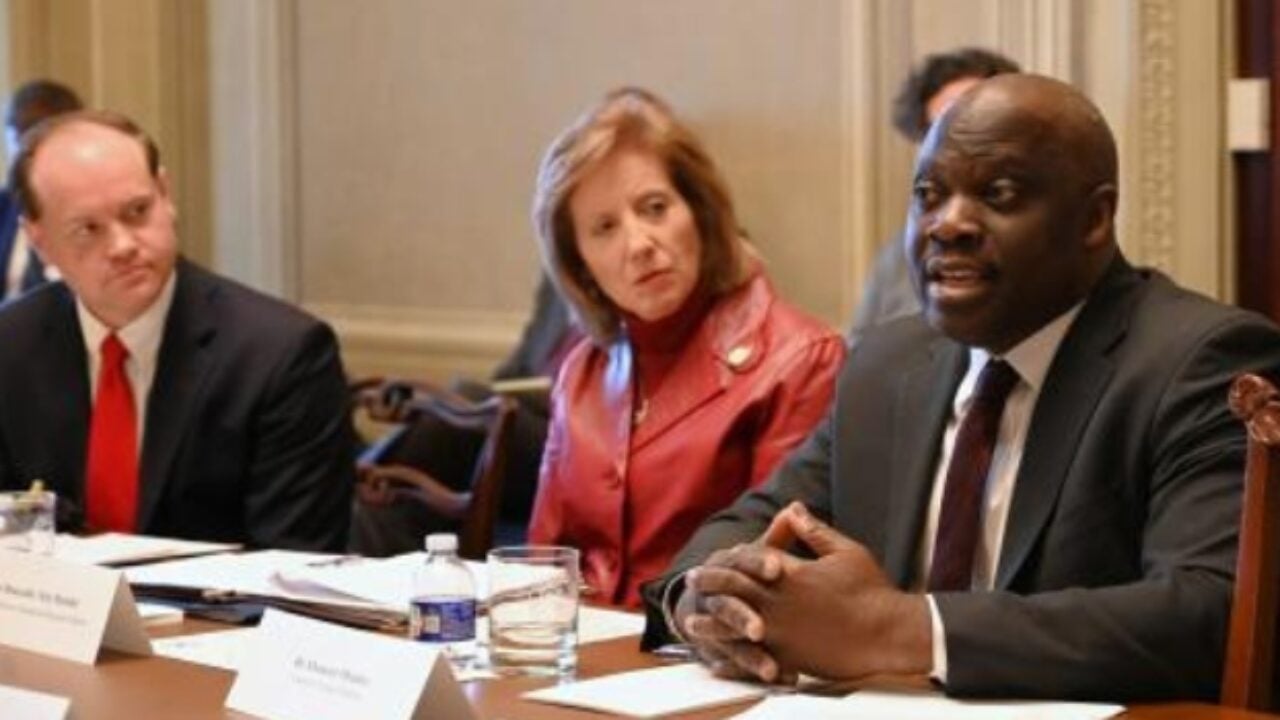
At a high-profile congressional briefing on Tuesday, U.S. lawmakers and experts called on the Nigerian government to abolish Sharia law in the 12 northern states where it is still enforced — and disband the religious-police institutions known as Hisbah. The call came from Dr. Ebenezer Obadare, a senior fellow for Africa Studies at Council on Foreign Relations (CFR), who testified before the joint session.
Obadare described the Sharia and Hisbah enforcement structure as deeply complicit in escalating insecurity and religious persecution in Nigeria. According to him, militant groups such as Boko Haram, Islamic State West Africa Province (ISWAP), and radicalised militant factions have “weaponised Sharia-based institutions and Hisbah operatives to advance extremist ideology, enforce forced conversions, and operate unchecked in many communities.”
“The deadliest and most serious threat confronting the Nigerian state today is jihadist terror,” Obadare emphasized. “Boko Haram’s barbarous and implacable campaign to overthrow the Nigerian state and establish an Islamic caliphate in its stead is the source of Nigeria’s present discontents.”
Obadare laid out a two-pronged strategy that he urged the United States and the international community to support:
Work with Nigerian security forces to neutralize Boko Haram, ISWAP, and other militant cells.
Put diplomatic and conditional-aid pressure on the Nigerian government to declare Sharia law unconstitutional in states where it’s been adopted — and formally disband all Hisbah commissions.
Obadare argued that these steps are necessary because religious-freedom protections under Nigeria’s constitution are undermined by parallel Sharia legal systems and religiously enforced policing. The presence of those systems, he says, fosters an environment where extremist groups and vigilante militias can act with near-total impunity.
He added that recent responses by Nigeria’s government — including airstrikes against militant hideouts, the recruitment of 30,000 additional policemen, and a national security emergency declaration — show that international pressure can yield action. He urged Washington to maintain consistent leverage.
The briefing, convened by the U.S. House Appropriations Committee and the House Foreign Affairs Committee, followed a directive from U.S. President Donald J. Trump, who — in a recent redesignation — labelled Nigeria a “Country of Particular Concern” (CPC) for religious-freedom violations.
Lawmakers present at the hearing described the spate of killings, abductions, and attacks on Christians across Nigeria as a “targeted campaign of religious cleansing.” They challenged narratives that painted the violence as mere banditry or inter-communal strife.
One key voice, Mario Díaz‑Balart, Vice-Chair of the House Appropriations Committee and Chairman of the National Security Subcommittee, said, “No one should live in fear because of how they worship.” The session’s organizers promised further review and possible tie-in of U.S. foreign aid to Nigeria with clear benchmarks on religious freedom and human-rights protection.
Nigeria has long wrestled with deep ethnic, religious, and regional divides. The enforcement of Sharia — especially criminal Sharia — in northern states since the early 2000s has created a dual-legal environment: Sharia for Muslims, and secular or customary law for others. While proponents argue it reflects the cultural and religious identity of northern majorities, critics say it undermines Nigeria’s secular constitutional guarantees and enables discrimination against religious minorities.
The recent hearing placed a spotlight on how extremism, religious policing, and militant violence are interconnected across regions. Experts argue that without structural reform — rather than just military intervention — the cycle of violence, displacement, and human-rights abuse will continue.
As more Christians flee violence, and as families lose loved ones to attacks, international pressure may increase. What emerges from Washington — and how Abuja responds — could reshape Nigeria’s legal, security, and religious landscape for years to come.