

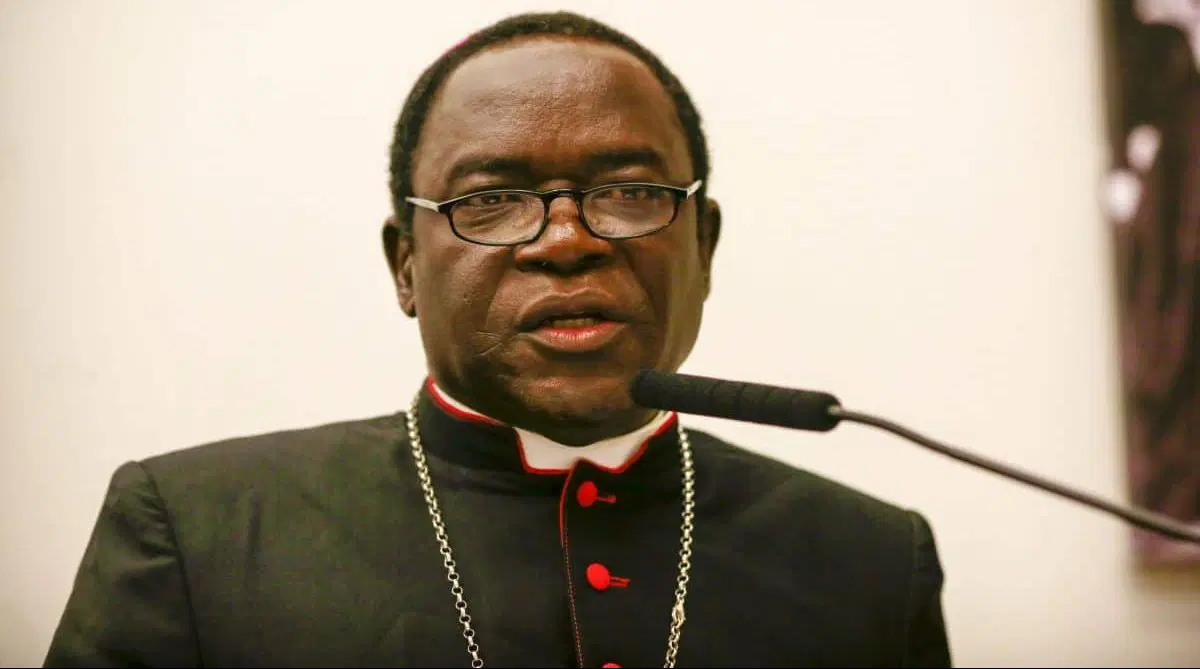
The Catholic Bishop of Sokoto Diocese, Most Rev. Matthew Kukah, has dismissed claims that Christian communities in Nigeria are facing genocide, insisting that such assertions are not backed by facts or proper definition.
Speaking at the 46th Supreme Convention of the Knights of St. Mulumba (KSM) in Kaduna, Kukah explained that genocide is defined by intention, not by the number of casualties. He noted that even large-scale killings do not automatically qualify as genocide unless there is a deliberate aim to eliminate a specific group.
- VIDEO: Woman Claiming to Be Chris Okafor’s Former Wife Makes Explosive Allegations
- I will not be vice-president to anybody ~ Peter Obi
- Israel recognises Somaliland as sovereign state
- 70-year-old Indian woman gives birth to her first child
- Ghanaian Prophet, Eboh Noah, Builds 8 Arks, Reveals God Has Warned Him That The World Will End On Christmas Day ~ Not By Fire, But By Another Global Flood.
- VIDEO: Pregnant wife bursts into tears as husband refuses to go beg neighbour Jollof rice
Kukah addressed what he described as repeated misinterpretations of his earlier statements. He said his presentation at the Vatican was based on a detailed 1,270-page study on conflicts in Nigeria and other regions, and nowhere did the research support claims of genocide or widespread martyrdom.
He questioned figures often circulated about attacks on churches, pointing out that some claims (such as the allegation that over a thousand churches are destroyed annually) are not backed by verified data. According to him, those pushing such narratives rarely consult the Catholic Church, which maintains accurate records.
Kukah also challenged the idea that Christians are being systematically persecuted, noting that Christians make up a large portion of Nigeria’s educated population and play major roles in the country’s economy. He believes that unity among Christian groups would further reduce discrimination and insecurity.
The bishop recently advised the United States against listing Nigeria as a “Country of Particular Concern,” arguing that such a designation could worsen tensions and hinder ongoing peace efforts. Despite acknowledging incidents of violence, he maintained that the situation does not amount to total religious persecution.