

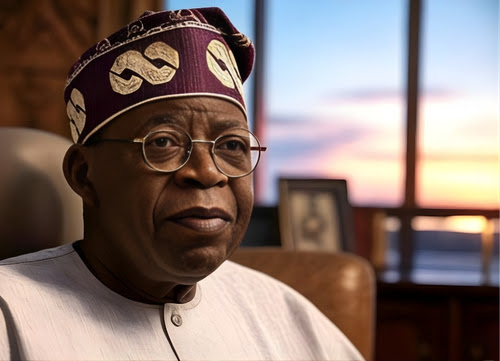
President Bola Ahmed Tinubu has withdrawn the earlier pardon granted to several convicted drug traffickers, kidnappers, arms dealers, and other serious offenders following widespread public outrage.
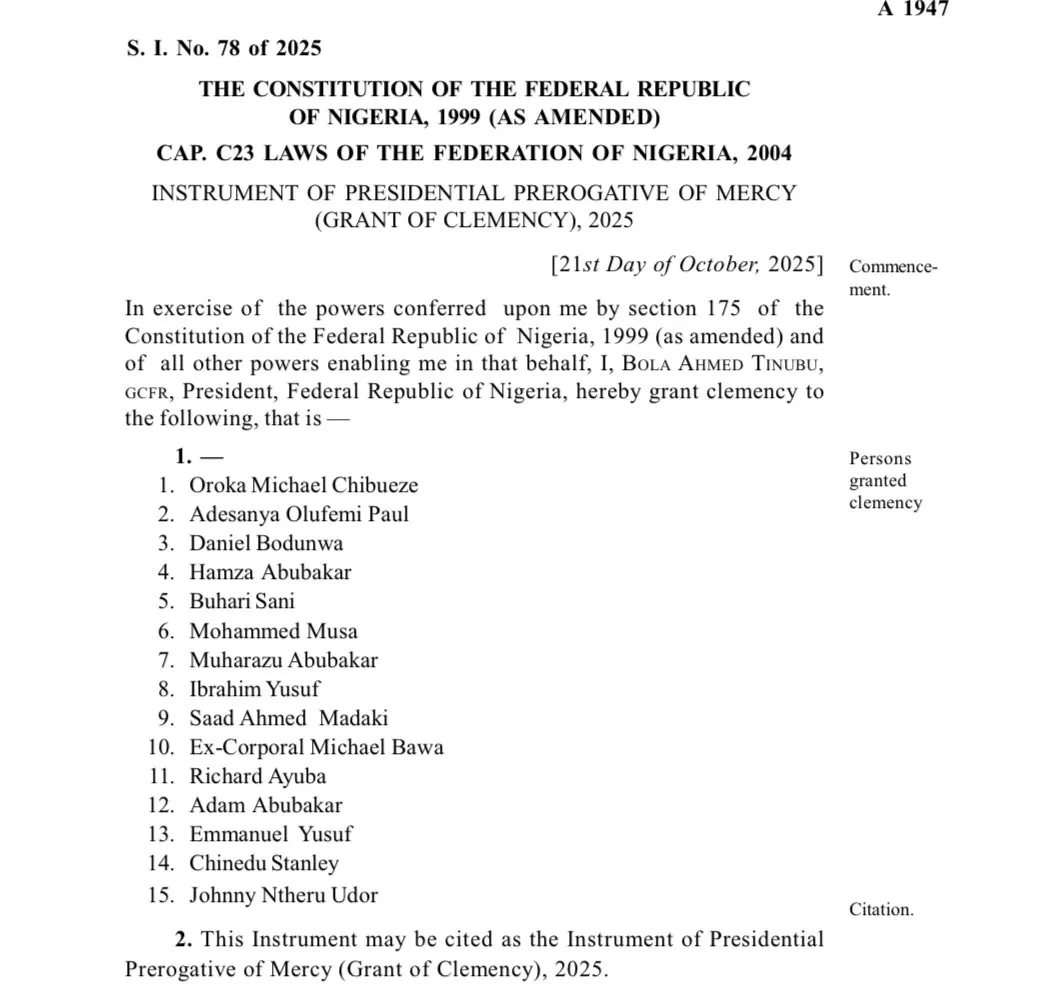
The decision, announced on Wednesday by presidential spokesperson Bayo Onanuga, came after consultations with the Council of State and a review of public reactions. According to Onanuga, the president’s move followed “the need to uphold justice, respect victims, and maintain national security.”
The earlier list, which included over 175 pardoned individuals, drew sharp criticism from Nigerians who questioned the government’s judgment in freeing convicts involved in grave crimes.
- VIDEO: Woman Claiming to Be Chris Okafor’s Former Wife Makes Explosive Allegations
- I will not be vice-president to anybody ~ Peter Obi
- Israel recognises Somaliland as sovereign state
- 70-year-old Indian woman gives birth to her first child
- Ghanaian Prophet, Eboh Noah, Builds 8 Arks, Reveals God Has Warned Him That The World Will End On Christmas Day ~ Not By Fire, But By Another Global Flood.
- VIDEO: Pregnant wife bursts into tears as husband refuses to go beg neighbour Jollof rice
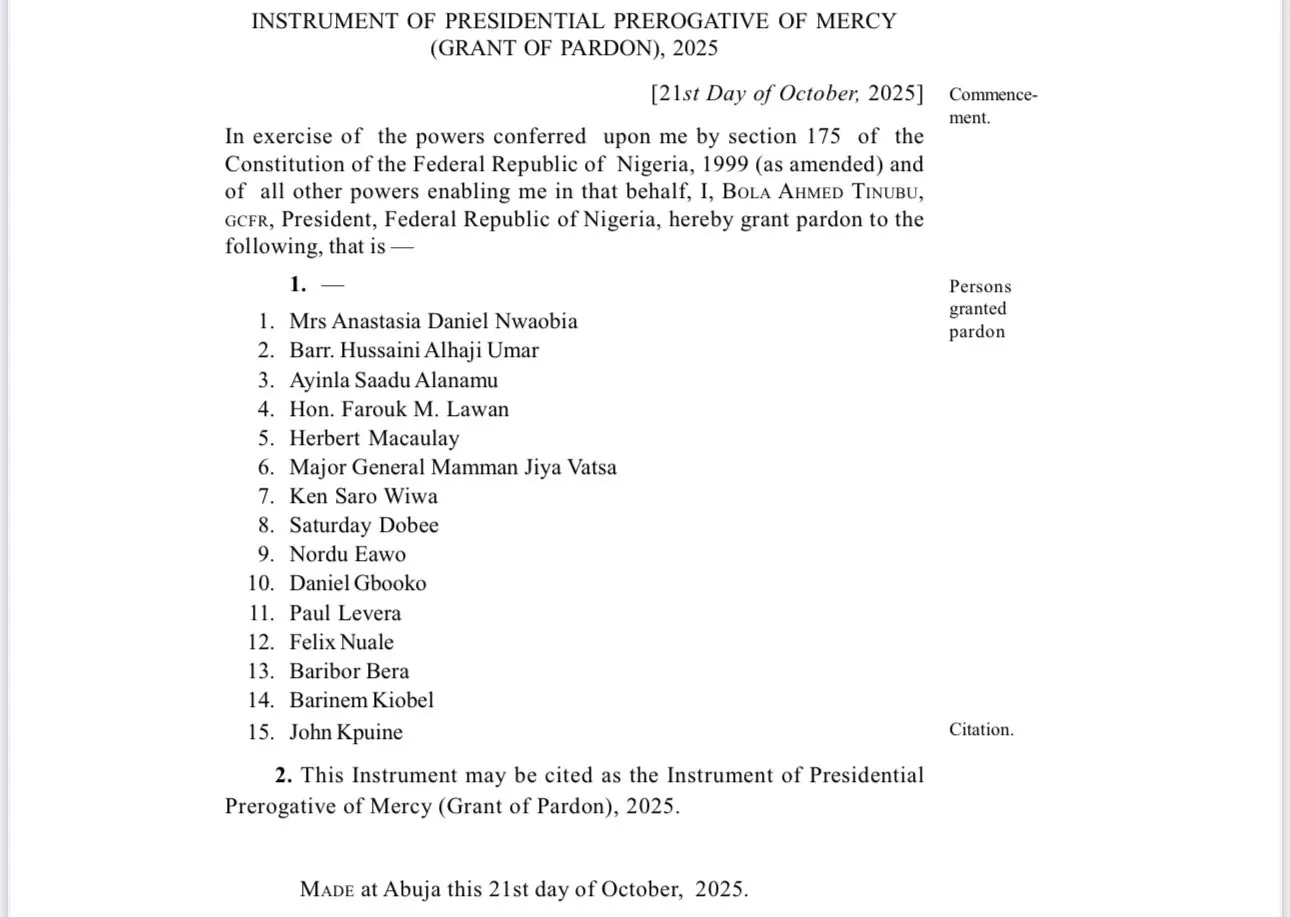
Tinubu, exercising his powers under Section 175 of the 1999 Constitution, ordered that names of individuals convicted of kidnapping, human trafficking, drug-related crimes, and unlawful possession of firearms be deleted from the pardon list.
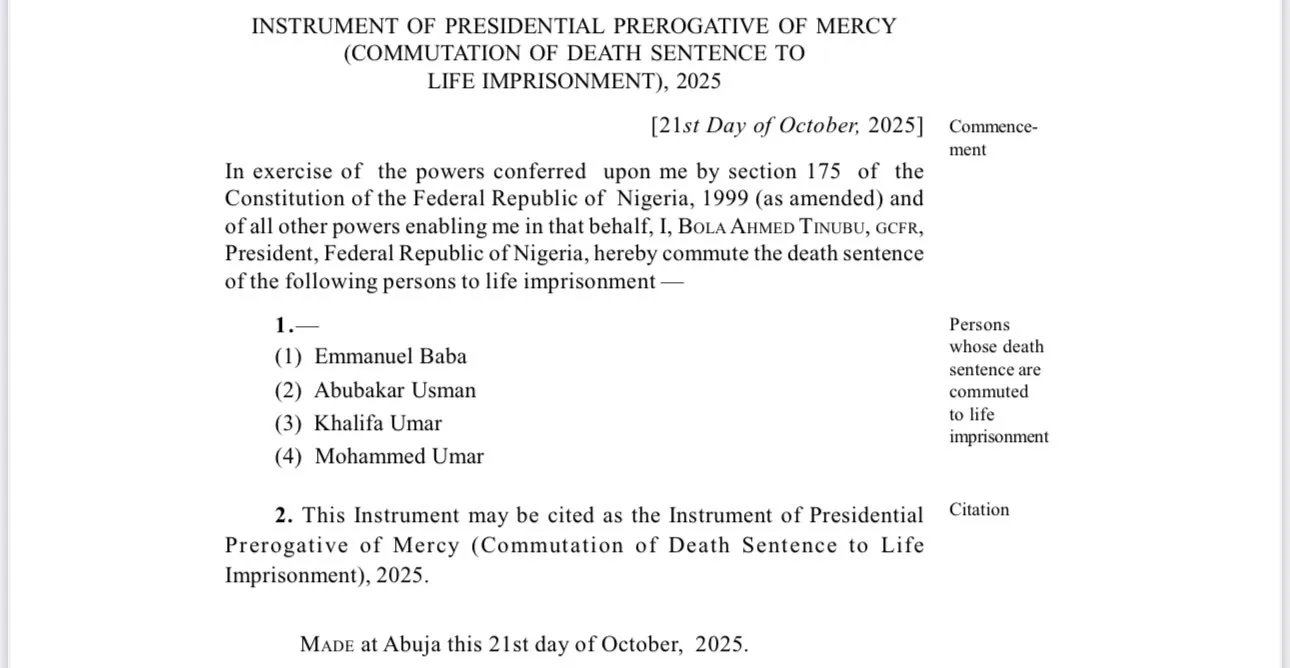
However, 15 people retained their clemency, including former lawmaker Farouk Lawan, and posthumous pardons were approved for Herbert Macaulay, Mamman Vatsa, and Ken Saro-Wiwa. The president also commuted four death sentences to life imprisonment.
To prevent similar controversies in the future, Tinubu directed that the Presidential Advisory Committee on Prerogative of Mercy be moved from the Ministry of Special Duties to the Ministry of Justice, ensuring greater scrutiny and consultation with prosecuting agencies before granting pardons.
He further reaffirmed his administration’s commitment to justice reforms, transparency, and accountability in the exercise of presidential powers.