

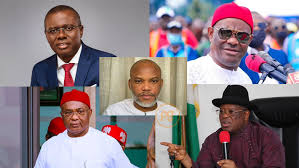
Detained leader of the Indigenous People of Biafra (IPOB), Nnamdi Kanu, has submitted a fresh motion before the Federal High Court in Abuja, naming 23 witnesses (including several top government figures) whom he plans to call in his defence.
Among those listed as compellable witnesses are former Attorney-General of the Federation Abubakar Malami, FCT Minister Nyesom Wike, former Chiefs of Army Staff Lt. Gen. Tukur Buratai and Gen. Theophilus Danjuma, Lagos State Governor Babajide Sanwo-Olu, Imo State Governor Hope Uzodinma, Minister of Works Dave Umahi, and former Abia State Governor Okezie Ikpeazu. Others include former NIA Director-General Ahmed Rufai Abubakar and DSS Director-General Yusuf Bichi.
- VIDEO: Woman Claiming to Be Chris Okafor’s Former Wife Makes Explosive Allegations
- I will not be vice-president to anybody ~ Peter Obi
- Israel recognises Somaliland as sovereign state
- 70-year-old Indian woman gives birth to her first child
- Ghanaian Prophet, Eboh Noah, Builds 8 Arks, Reveals God Has Warned Him That The World Will End On Christmas Day ~ Not By Fire, But By Another Global Flood.
- VIDEO: Pregnant wife bursts into tears as husband refuses to go beg neighbour Jollof rice
Kanu, who faces terrorism-related charges stemming from his separatist campaigns, told the court that he is ready to open his defence on October 24, following a medical assessment declaring him fit for trial. He requested a 90-day window to complete his defence, stating that his witnesses were divided into “ordinary but material” and “vital and compellable” categories. He also vowed to testify personally, describing his statements as politically motivated rather than criminal.
Meanwhile, Kanu’s lawyer, Aloy Ejimakor, his brother Emmanuel Kanu, and ten others were remanded in Kuje Prison after being arrested during a peaceful protest demanding Kanu’s release. They were charged with inciting disturbance and disobeying a lawful order.
Despite these developments, Kanu’s legal team says he remains focused on proving his innocence, insisting that “justice must not only be done but be seen to have been done.”