

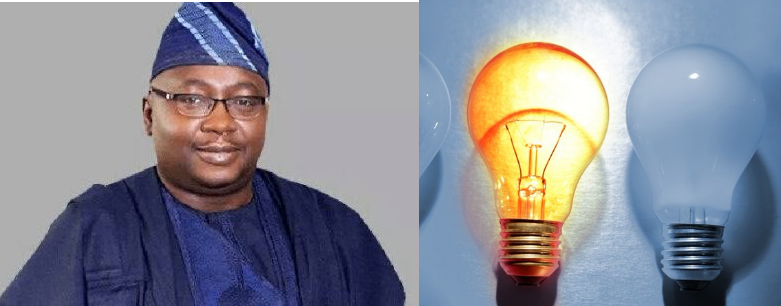
The Federal Government has promised that Nigerians will soon enjoy steady, round-the-clock electricity.
Minister of Power Adebayo Adelabu gave the assurance in Abuja on Thursday while inaugurating two new blocks at the National Power Training Institute of Nigeria (NAPTIN), which include five training workshops and a 104-room hostel.
Adelabu said recent records of Nigeria’s highest power generation and transmission show that reforms in the sector are beginning to deliver results. “In no time, we are going to witness a country where there is 24/7 uninterrupted power supply. This is possible, and the signs are already here,” he said.
- VIDEO: Woman Claiming to Be Chris Okafor’s Former Wife Makes Explosive Allegations
- I will not be vice-president to anybody ~ Peter Obi
- Israel recognises Somaliland as sovereign state
- 70-year-old Indian woman gives birth to her first child
- Ghanaian Prophet, Eboh Noah, Builds 8 Arks, Reveals God Has Warned Him That The World Will End On Christmas Day ~ Not By Fire, But By Another Global Flood.
- VIDEO: Pregnant wife bursts into tears as husband refuses to go beg neighbour Jollof rice
The minister added that reliable electricity is key to driving growth in education, healthcare, aviation, and other vital sectors. He stressed that Nigeria has the talent and resources to produce its own meters, transformers, and cables, noting that self-reliance in power equipment was within reach.
He also highlighted ongoing projects to provide power for universities, teaching hospitals, health centers, and rural communities, saying these efforts reflect President Bola Tinubu’s commitment to turning vision into action.
NAPTIN Director-General Ahmed Nagode said the new facilities will help train a new generation of skilled professionals for the energy industry. He revealed plans to launch the Next Generation Rescue Programme, aimed at empowering young Nigerians.
Nagode commended the European Union and the French Government, whose technical and financial backing through Agence Française de Développement (AFD) supported the projects.