

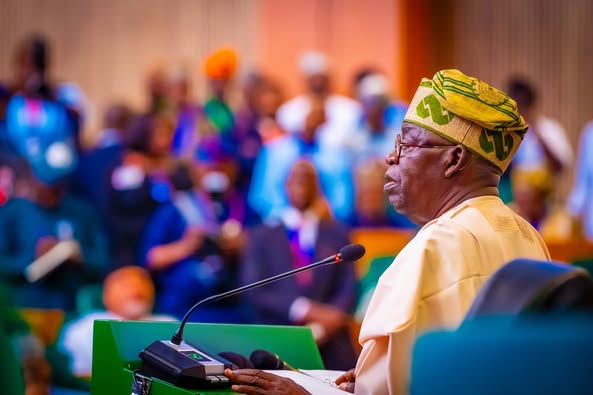
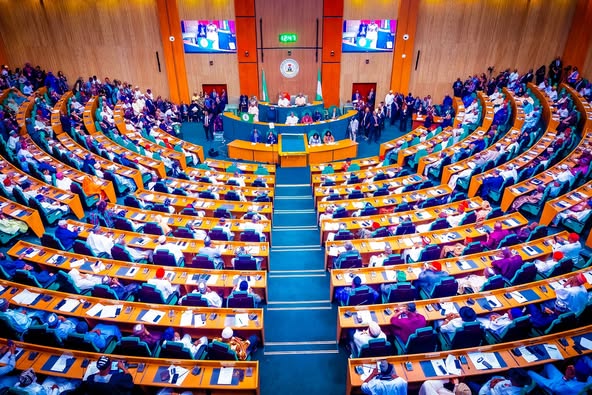
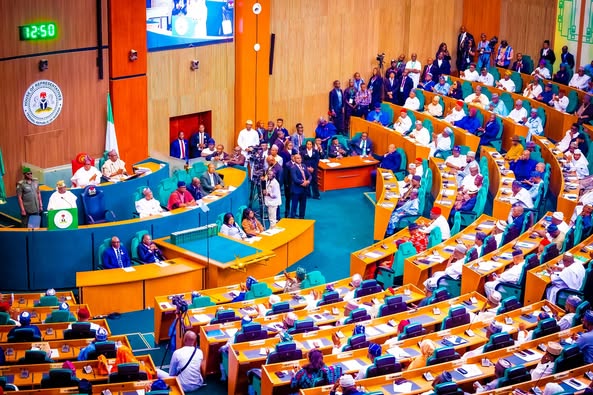
The President of the Federal Republic of Nigeria, Asiwaju Bola Ahmed Tinubu on Tuesday December 17 presented the proposal for 2025 budget to the Joint Session of the National Assembly.
The budget proposal titled “2025 Budget of Restoration: Securing Peace, Rebuilding Prosperity” according to Tinubu reflects his administration’s unshakable commitment to stabilizing Nigeria’s economy, improving lives, and paving the way for a brighter future for every Nigerian.
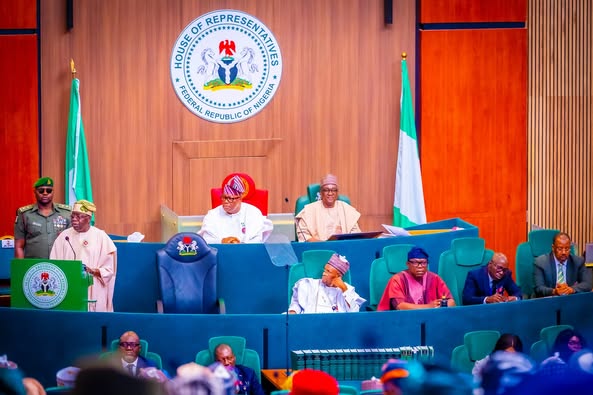
“The time for lamentation is over. This is a time to act. A time to support and promote greater investment in the private sector. A time for every Nigerian to look hopefully towards a brighter future because a new day has dawned for us as a nation,” a statement on the President’s Facebook page reads.
- VIDEO: Woman Claiming to Be Chris Okafor’s Former Wife Makes Explosive Allegations
- I will not be vice-president to anybody ~ Peter Obi
- Israel recognises Somaliland as sovereign state
- 70-year-old Indian woman gives birth to her first child
- Ghanaian Prophet, Eboh Noah, Builds 8 Arks, Reveals God Has Warned Him That The World Will End On Christmas Day ~ Not By Fire, But By Another Global Flood.
- VIDEO: Pregnant wife bursts into tears as husband refuses to go beg neighbour Jollof rice
The Tinubu’s 2025 budget proposal which plans to spend a whopping N49.70 trillion, has made significant allocation improvements in key areas, namely; Defence and Security, Infrastructure, Education, and Health. These are areas where the country shows the need for adequate attention.
₦4.91 trillion is allocated for Defence and Security, while ₦4.06 trillion is allocated for Infrastructure, ₦3.52 trillion for Education, and ₦2.48 trillion for Health.
Questions have been raised as to why Agriculture is not included in the key areas as current situation of Food price inflation and shortage proves so.
Tinubu has gone on to claim that his administration has made some progress as figures show a growth of 3.46% in Q3 2024, from 2.54% in Q3 2023, with foreign reserves standing at $42 billion, and a trade surplus of ₦5.8 trillion.