

If you have a preferred tone (formal, urgent, concise) or a target outlet, I can tailor one accordingly.
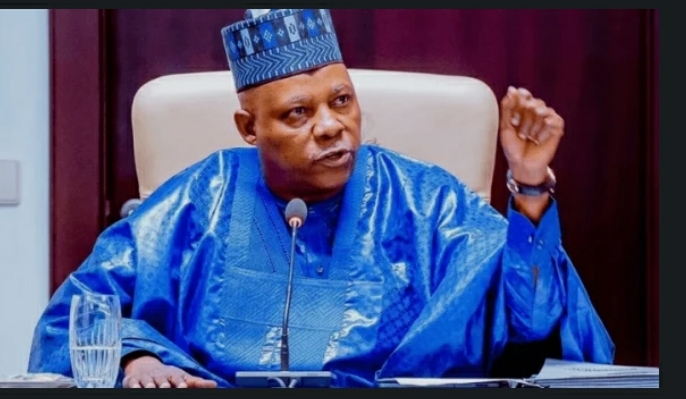
The Vice President, Senator Kashim Shettima, has reaffirmed the resolve of the administration of President Bola Ahmed Tinubu to remodel the National Institute for Policy and Strategic Studies (NIPSS) into a globally recognised centre of excellence that is digitally driven and financially stable by 2030.
According to him, apart from serving as the most strategic platform for developing thinkers, reformers, and innovators in Nigeria, the institute’s Senior Executive Course represents a deliberate investment in the nation’s future leadership as well as a meeting point for ideas that define policy, guide reform, and influence the course of national development.
Shettima stated this on Saturday when he represented President Tinubu at the graduation of Senior Executive Course 47 of NIPSS in Kuru, Plateau State.
His Excellency, President Bola Ahmed Tinubu, has been unequivocal in his commitment to supporting NIPSS in its transformation agenda, particularly its ambition to become a digitally driven, financially stable, and globally recognised centre of excellence by 2030.
We recognise the institute’s critical role in shaping national policy and in building the leadership capacity required to navigate an increasingly complex world,” he declared.
The Vice President noted that the support the Tinubu administration is giving to transform the institute exceeds funding, infrastructure and conducive research environment.
He said, “Our support must therefore go beyond funding, infrastructure, and a conducive research environment. It must ensure that NIPSS produces implementation ready policy papers and that its outputs are fully integrated into national decision making and execution frameworks.”
VP Shettima applauded the theme of the Senior Executive Course 47, “Blue Economy and Sustainable Development in Nigeria,” saying it is a reflection of the urgency with remarkable clarity, and “captures the reality that development, security, environmental stewardship, and social inclusion are inseparable.”
He, however, observed that the strength of the academic work does not depend only on its academic depth, “but in its insistence that policy must be practical, implementable, and firmly grounded in Nigeria’s realities.”Commending the graduands, the VP said, “We are grateful for your sustained and rigorous enquiries into the affairs of the maritime domain, enquiries that continue to provide the nation with insights it depends upon.
Assuring that the Tinubu administration takes evidence-based policy making very seriously, the Vice President said he had already directed relevant ministries, departments, and agencies to give the report and recommendations of the graduands the close attention they deserve, both for immediate application and for long term strategic planning.”